The Aboriginal people of Australia had a unique way of
mapping the world around us. As they moved from place to place (to avoid over consumption
of the land), they sang the terrain around them. This is how they found their
sense of place and were able to navigate through the outback.
The name English speaking Australians gave these tracks and
maps is “Songlines”.
Within the Aborinal race there was around 500 different tribes. Each of these
tribes travelled their own songlines and knew the ins and outs of them, the
earth becoming closely linked with their own identity, and the identity of the
group.


Indigenous Painting Representing songlines
The tribes also tended to keep to themselves for the most
part, as they all spoke different languages.
Singing the maps during travel might seem more primitive
than etching geographical locations onto a map but it was an intricate system
that remained unchanged for hundreds of years. There are still remnants of
Songlines to this day. This was an effective form of communication between the
tribe members. Within the songs, the people would weave tales of how prosperous
the land was and whether there was danger ahead. This was quite effective in
keeping those who were within the same group safe and fed.
The exclusivity of each clan to their own songlines and
areas was predominantly due to the language barrier but also had to do with
something we call “Dreaming”. In ‘The Songlines’ (B. Chatwin 1987), the author
explains the Dreaming as a kind of affinity to a particular part of nature. The
example given was a wallaby. If their “totem” was a wallaby it meant they
believed themself to be a direct descendant of the “Wallaby Father” and a
brother to all wallabies and other humans who had the Wallaby Dreaming.
He continues, describing how the affinity leads them to
their songlines. It is believed that their “totemic ancestor”, while travelling
Australia, scattered a trail of words and musical notes to be followed.
“Suppose the man strayed from his songline?”
“He was trespassing. He might get speared for it.”
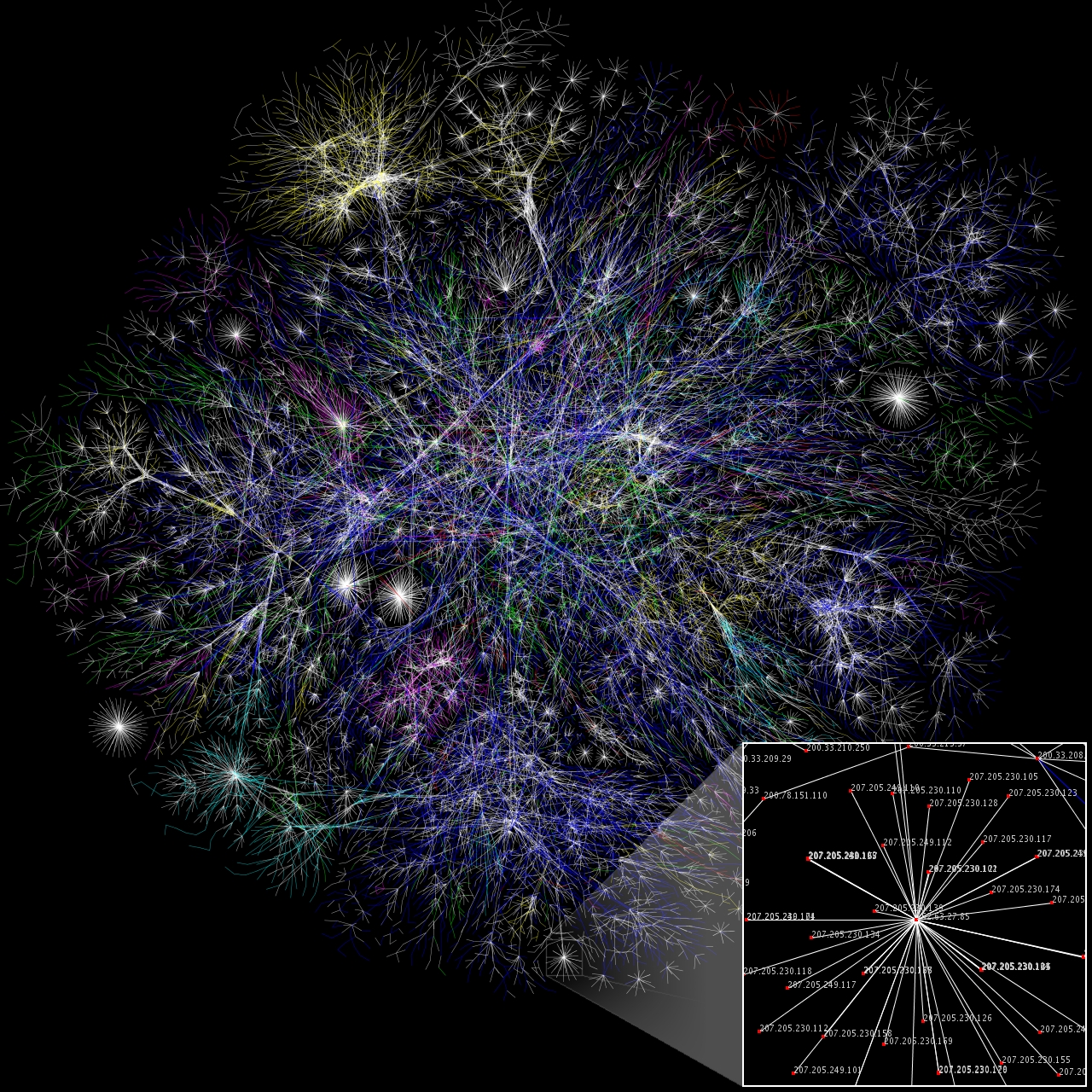
Like Songlines, the intricate networks within different
social media serve as a way to find and communicate with peple who have similar
interests or beliefs as you. This is represented well by Tumblr.
Reblogging posts on Tumblr, or even liking and commenting,
can be seen as a kind of digital songline. People reacting to content they have
in common with the poster. Thus, online communities or “tribes” are formed.
Similarly, these people stick to their group, communicating in the specific
dialogue that is expected from them (using exclusive language such as inside
jokes or slang).
Tracing posts by individuals of the same group, it becomes
evident how their language evolves and changes to fit in. Victoria Kuttianen
summed this phenomena up in her Wednesday lecture, stating: “We are just
energy, just blobs, until we learn we are coherent, that we are cognitive.”
In the same way, those that stray from their chosen paths
and participate in another groups posts can become a receptor of a kind of
metaphorical spear. They receive backlash for speaking on something they
personally aren’t affiliated with.
Human nature hasn’t changed much over the years, and behavioural
patterns, first established by our ancestors hundreds of years ago, can still
be seen today. The only variable is the medium upon which they are displayed.
Ysabel Lancaster
References
1)
Queensland Rural Medical Education Limited (Oct
17, 2013) What are song lines? https://www.youtube.com/watch?v=kVOG-RKTFIo
2)
B.
Chatwin, (1987) The Songlines,
London, Jonathan Cape Ltd
3) Kuttainen,
V. (2017). BA1002: Our Space: Networks, Narrative and the Making of Place, week
5 notes
4)
Josephine Mick, Pipalyatjara (1994),KUNGKARANGKALPA: SEVEN SISTERS SONGLINE http://sevensisterssongline.com/resources/